Start with who is buying
Ask who is most likely to visit. A studio near a station and a four-bedroom house with a garden attract different people, and the furniture tells each of them who the home is for.
Look at the listings that sold nearby and at the buyer files in your agency: the people who asked for this kind of home are the best clue to what they want to see.
Holiday lets and furnished rentals are a special case: the guest is the buyer. A relaxed Scandinavian or bohemian look reads as welcoming and fits how people want to spend a weekend away.
- First-time buyers and young professionals: modern or Scandinavian, light and compact
- Families: warm, practical rooms in a classic or Scandinavian look
- Downsizers and retirees: classic or minimalist, comfortable and uncluttered
- Investors and landlords: neutral and durable, minimalist or modern
- Creative buyers in lofts and converted spaces: industrial or bohemian
Match the property and its period
Let the architecture lead. A period apartment with moldings and parquet sits well with classic or soft Scandinavian furniture. A loft or former workshop with exposed brick suits industrial. A new build with clean lines suits modern or minimalist. A beach or country house can take bohemian touches.
Match the price level too. Furniture should look like it belongs with the finishes: very basic pieces in a high-end home, or heavy ornate pieces in a small starter flat, both read as off.
Think about the purpose of each room as well. A spare room can be staged as a home office for remote workers or as a guest bedroom for families: choose the use that matches your buyer, and keep the style in line with the rest of the listing.
The six styles in one line each
These are the six styles Stagova offers. Each one is meant to change the furniture and nothing else.
Light styles photograph brighter and make small rooms feel larger. Darker, richer styles add character but suit rooms with good daylight and height.
- Modern: clean lines, a neutral palette with a few bold accents, metal and glass.
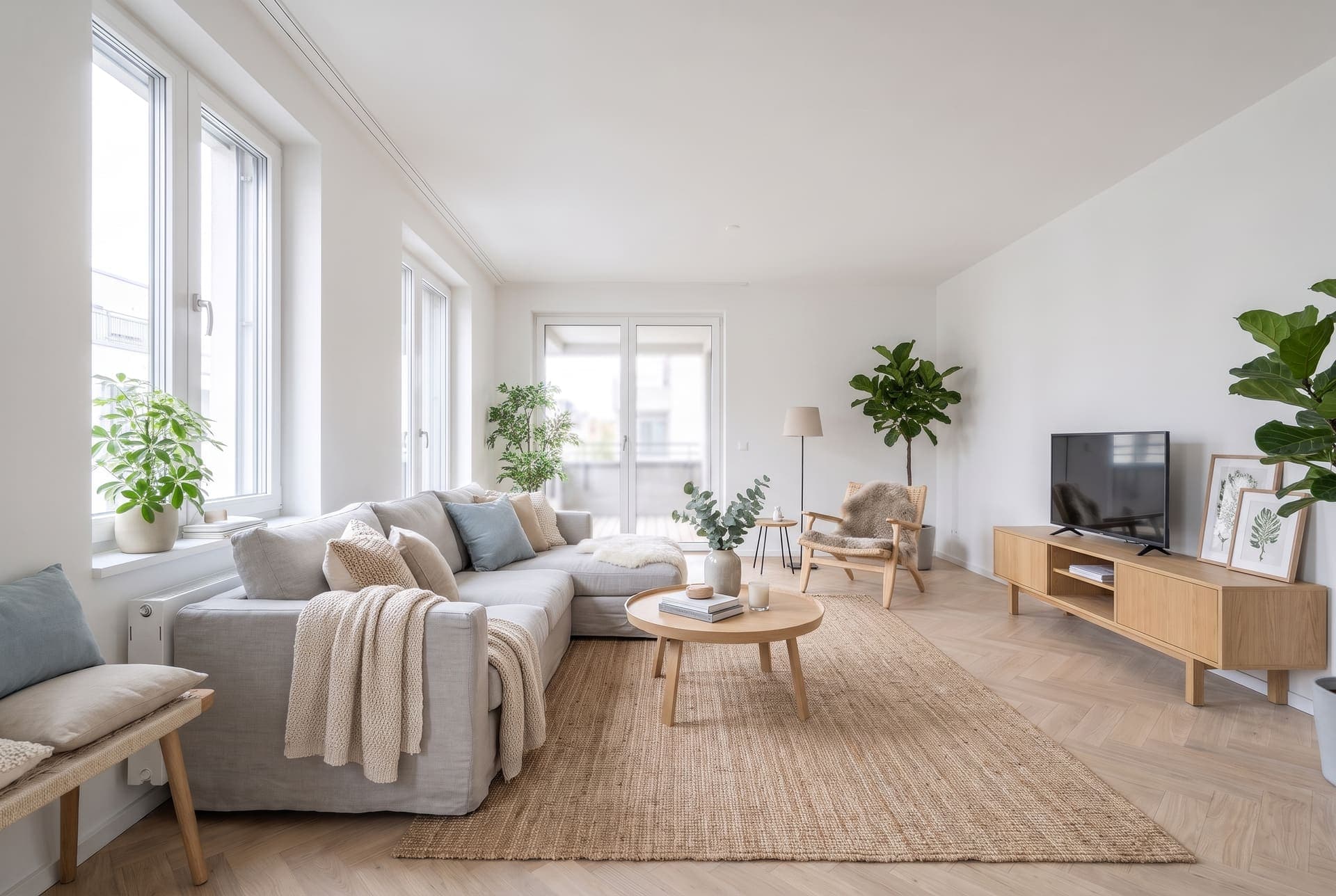
- Scandinavian: light wood, white and soft grey, textiles and plants, bright and calm, ideal for small sunny rooms.
- Industrial: dark metal, leather and raw wood, made for lofts, brick and high ceilings.
- Bohemian: layered textiles, rattan, plants and warm colors, relaxed and full of character.
- Classic: traditional shapes, rich wood and symmetrical layouts, at home in period buildings and family houses.
- Minimalist: a few well-chosen pieces, plain colors and plenty of free floor, to show off space and light.
When in doubt, stay neutral
If the buyer is unclear, go neutral: light colors, simple shapes, few accessories. The aim is not to impress but to leave room for the viewer’s own furniture and taste. Modern, Scandinavian and minimalist are the natural starting points.
Strong styles pay off when you know your audience: industrial for a loft hunter, bohemian for a holiday home. Keep one style across the whole listing, so the photos read as one home and not as rooms from different houses.
Neutral does not mean cold. A warm throw, a plant and one piece of art are enough to make a room feel lived in without telling the viewer how to live.
Test two styles on the same photo
You do not have to guess. Run the same photo in two styles and compare, then keep the one that fits the room and the audience. With Stagova, every original stays next to its result in your library, with a slider to compare. You get 10 free credits to try it on your own photos, no card needed, and one credit is one photo.
Then check each result at thumbnail size, the way it appears on a property portal. Does the room read clearly? Does the furniture suit the size of the space? Keep the style you would be proud to see on the first photo of the listing.
If a result is close but not right, move to the neighboring style rather than starting over: Scandinavian when modern feels cold, modern when classic feels heavy, minimalist when the room looks crowded. Small steps are easier to judge than a total change.